
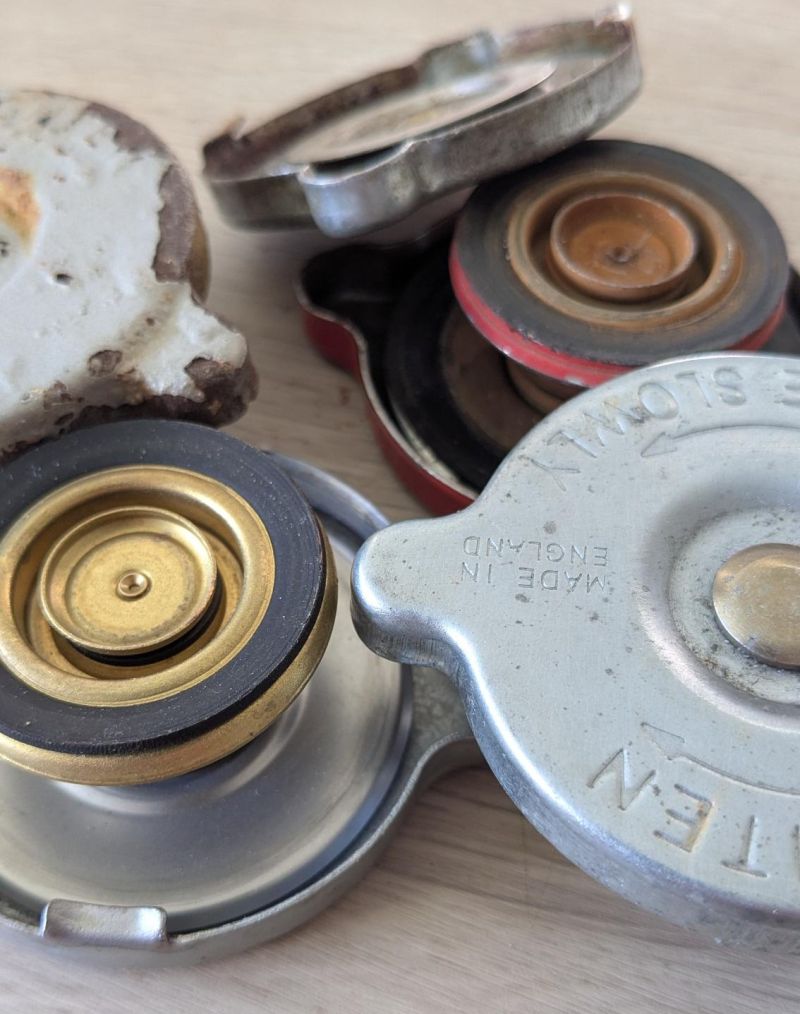
Pressure caps are one of the most overlooked components in a marine cooling system. They’re small, inexpensive, and easy to ignore — right up until they cause coolant loss and overheating. Understanding how they work (and how to choose the correct one) is an important part of maintaining a reliable fresh‑water cooled marine engine.
This article explains what pressure caps do, how their ratings affect system behaviour, and how to identify the correct type for your engine.
1. What a Pressure Cap Actually Does
A pressure cap is more than just a lid. It’s a spring‑loaded safety valve that regulates pressure inside the closed side of the cooling system.
A pressure cap has three jobs:
- Seal the system so coolant can build pressure
- Raise the boiling point of the coolant
- Allow controlled expansion and return flow to a recovery bottle (if fitted)
A pressure cap is a pressure regulator and boiling‑point controller — not just a stopper.
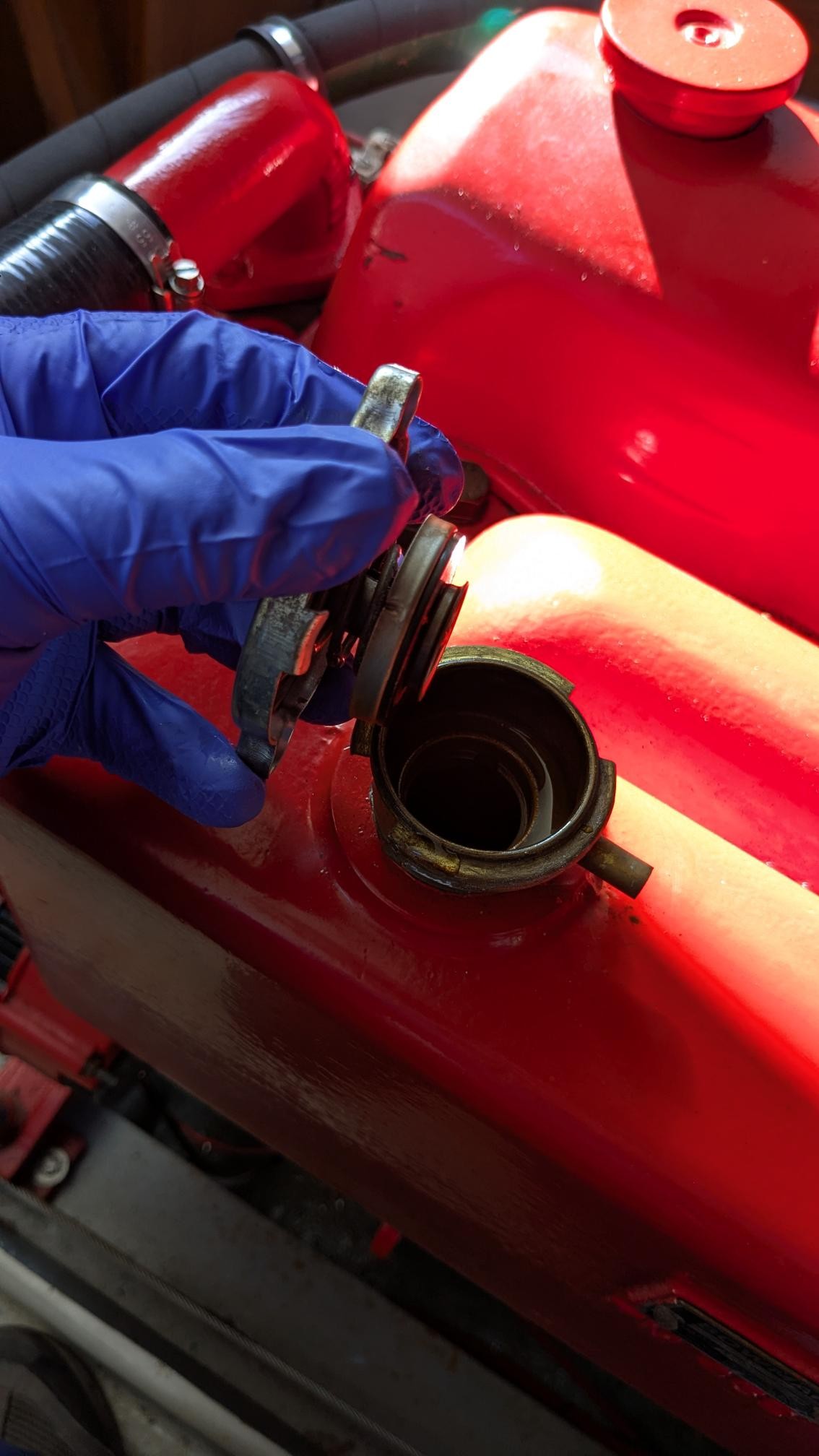
2. Pressure Ratings — What They Mean
Pressure caps are usually rated in kPa or psi (e.g., 75 kPa, 7 psi, 15 psi). This rating determines how much pressure the freshwater side of the cooling system can build before the cap opens.
Higher pressure = higher boiling point
The higher the system pressure, the higher the temperature at which the coolant inside the engine boils.
This matters because:
- Engines run hotter under load
- Coolant needs headroom before boiling
- Boiling coolant creates vapour pockets and overheating
But higher pressure also increases stress
A cap that’s too highly rated can:
- Over‑pressurise old hoses
- Force leaks at weak joints
- Crack plastic header tanks
- Burst ageing heat exchangers
- Create safety issues
A cap that’s rated too low can:
- Allow early boiling
- Cause overflow and coolant loss
- Lead to overheating under load
- Mask underlying cooling issues
The rating must match the engine manufacturer’s specification.
3. Why Marine Pressure Caps Fail
Marine engines live hard lives. Common failure modes include:
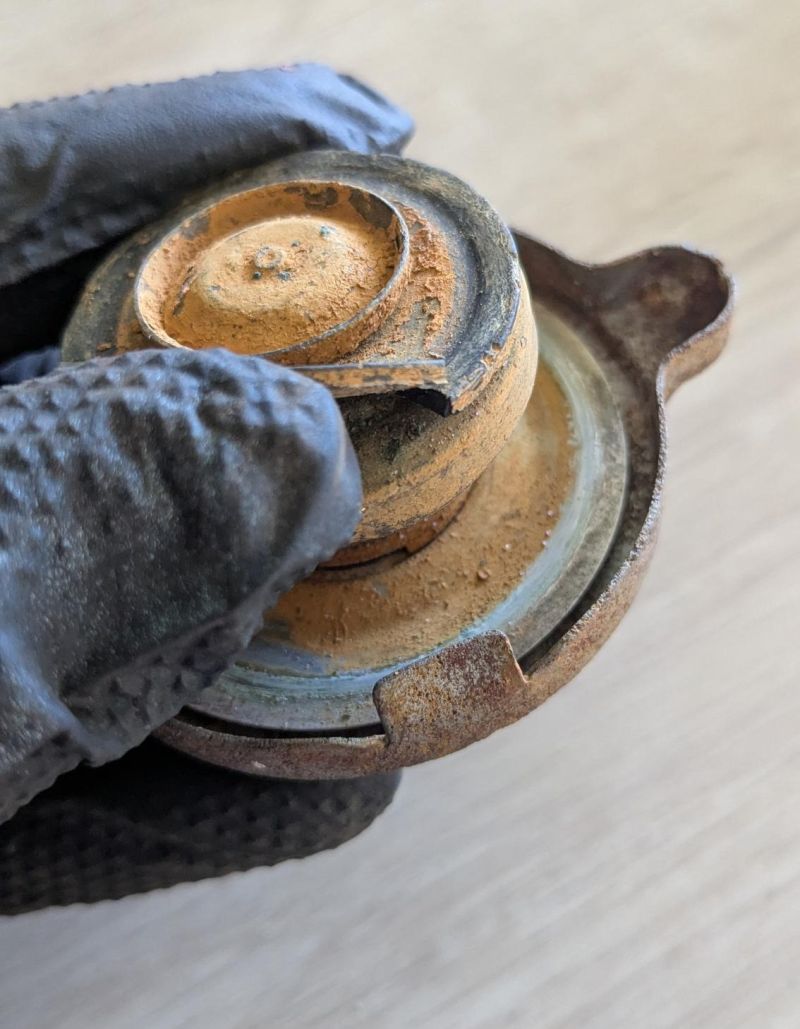
- Hardened or perished rubber seals
- Weak or corroded springs
- Incorrectly rated caps fitted during servicing
A cap can look fine externally and still fail internally.
4. How to Identify the Correct Cap
Choosing the right cap isn’t just about the pressure rating — you also need to match the type.
Key factors:
- Pressure rating — must match OEM
- Neck depth — measure the depth of the filler neck if unsure
- Spring height — varies between manufacturers
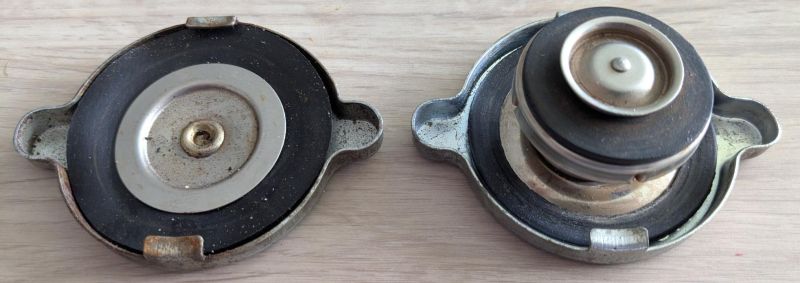
- Seal type — single‑seal vs dual‑seal
- Expansion tank compatibility — only dual‑seal caps work with recovery bottles
- Aftermarket heat exchangers — sometimes supplied with caps that don’t match the system’s correct pressure rating
5. How to Inspect a Pressure Cap
A quick inspection can reveal most issues:
- Check the rubber seal for hardening or cracking
- Check the spring for corrosion or weakness
- Check the neck seating surface for corrosion or debris
If in doubt, replace it. Caps are cheap — engines aren’t.
6. When to Replace a Pressure Cap
General guidance:
- Every 2‑3 years
- If the seal is hardened
- If the spring is weak
- If the system is losing coolant with no visible leaks
- If the engine overheats intermittently under load
A failing cap can mimic far more serious cooling problems.
7. Why the Wrong Cap Causes Real Problems
A pressure cap sets the entire system’s operating pressure. If it’s wrong, everything downstream behaves incorrectly.
Too high a rating:
- Excess pressure
- Leaks at joints
- Burst hoses
- Cracked tanks
- Heat exchanger failures
- Safety issues
Too low a rating:
- Early boiling
- Overflow
- Coolant loss
- Overheating
- Air pockets forming in the system
8. Practical Advice for Boat Owners
- Always replace like‑for‑like unless the manufacturer specifies otherwise
- Never assume a new cap is correct — check the rating
- Never mix cap types (single‑seal vs dual‑seal)
- If you’re unsure, check the engine manual or ask a specialist
- If you see coolant in the bilges and there’s no obvious leak source, check the integrity of the cap
Conclusion
Pressure caps are small, inexpensive components that play a critical role in cooling system performance. Choosing the correct type, maintaining it properly, and replacing it at sensible intervals can prevent overheating, coolant loss, and expensive failures.
If you’re unsure whether your pressure cap is correct or functioning properly, feel free to send a photo — we’re always happy to advise.
Related Technical Articles
For deeper technical reading on marine cooling systems:
Marine Engine Overheating — Causes, Diagnosis & Solutions → Winterising Your Inboard Engine: Cooling System Essentials → Marine Exhaust Elbow Blockage — Symptoms, Diagnosis & Solutions →Brehon Engineering is able to diagnose, clean, refurbish and pressure‑test cooling components fitted to a wide range of raw‑water‑cooled marine diesels and marine generators, including (but not limited to): Yanmar, Volvo Penta (D‑series, TAMD, MD, KAD, etc.), Nanni, Ford Sabre, Ford Mermaid, Ford Lehman, Vetus, Lister and Lister Petter, Lombardini, Westerbeke, Beta Marine, Sole Diesel, Bukh, Sabb/Saab, FPT (Fiat Powertrain), Iveco, Watermota (Sea Panther, Crossflow, etc.), Kubota‑based marinised engines, Thorneycroft, Peugeot/Indenor marinised engines, Isuzu‑based marinised engines, John Deere marine diesels, MAN (small marine diesels), Scania (older marine diesels), Mercedes‑based marinised engines, Gardner, Detroit Diesel, Cummins (B‑series and QSB/QSC), Caterpillar marine engines (heat exchangers, charge air coolers and raw‑water side components), and other raw‑water‑cooled marine engines and marine generators.
Note: Never work on a hot cooling system. Engines must be left to cool completely to ambient temperature before inspecting or working on any part of the system. If in doubt, contact a qualified Marine Engineer.